
Pinglu Canal achieves full water connectivity
Source:CCCCTime:2026-06-12
Following the filling of the Qingnian hub in early May, the Madao and Qishi hubs of the Pinglu Canal—the flagship project of the New International Land-Sea Trade Corridor—have also completed water filling. With all three hubs now filled, the canal's entire waterway has been connected.
Following the filling of the Qingnian hub in early May, the Madao and Qishi hubs of the Pinglu Canal—the flagship project of the New International Land-Sea Trade Corridor—have also completed water filling. With all three hubs now filled, the canal's entire waterway has been connected.
The full connectivity of the canal's water system marks the completion of its main construction works and lays a solid foundation for its opening to navigation in September.
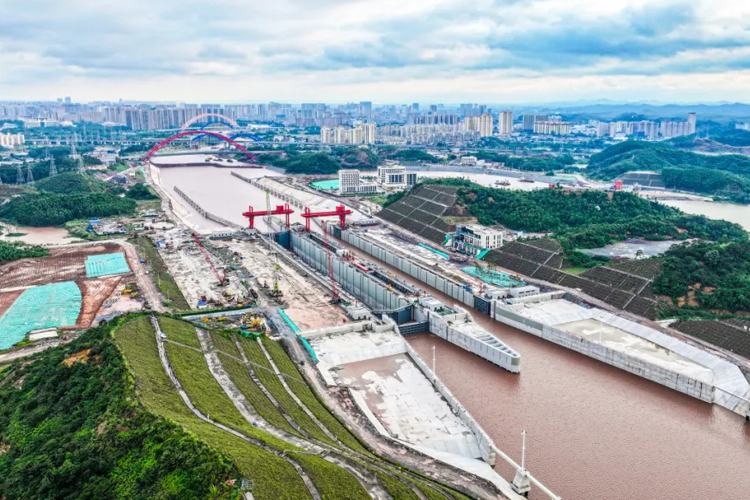
Photo shows the Qingnian hub of the Pinglu Canal.
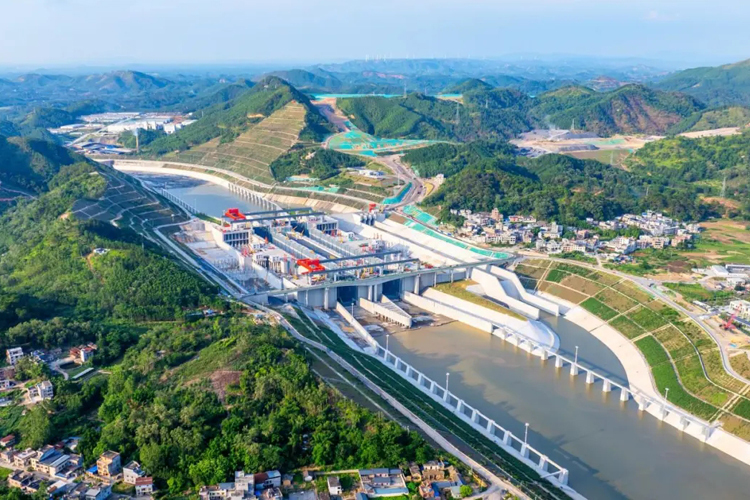
Photo shows the Madao hub of the Pinglu Canal.
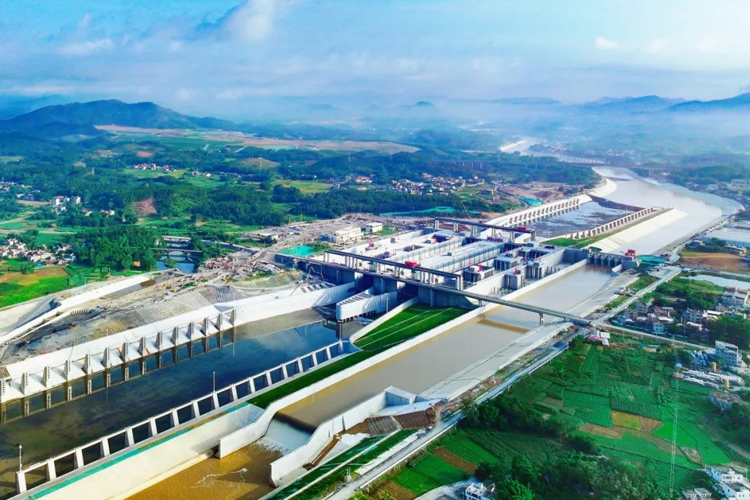
Photo shows the Qishi hub of the Pinglu Canal.
The Beibu Gulf in Guangxi is a naturally deep-water harbor and China's closest maritime gateway to ASEAN. Yet for decades, cargo from southwest China's hinterland had to detour through the Pearl River Delta and reach the sea via Guangzhou Port. Once operational, the Pinglu Canal will provide a faster, more direct route to the sea.
The canal begins at the Pingtang River estuary in Hengzhou, Nanning, and follows the Qinjiang River south to the Beibu Gulf. Stretching 134.2 kilometers, it is the world's highest-grade river-sea canal, capable of accommodating 5,000-tonne vessels. Three hubs—Madao, Qishi, and Qingnian—are positioned along the route to overcome a total elevation difference of about 65 meters and ensure smooth passage for large vessels.
Compared with the current route via Guangzhou Port, the canal will shorten inland waterway transport by about 560 kilometers, significantly reducing transit times and shipping costs. It will also connect the Xijiang River and Pearl River systems with the Beibu Gulf, ease navigation pressure on the lower Xijiang River, and help relieve the transport burden on the Yangtze River through rail-water intermodal transport.
The project has set several world records.
The Madao hub features the world's largest inland water-saving ship lock. Each lock chamber covers an area equivalent to one and a half standard football fields, and the twin-lock system can accommodate up to 12 vessels of 5,000 tonnes simultaneously.
Its pioneering three-tier stacked water-saving basin system reduces water consumption by more than 60 percent.
The 70-tonne operating valves at the Madao and Qishi hubs have set a world record for speed, opening in just one minute and closing in 30 seconds. This is two to four times faster than conventional ship locks, greatly reducing vessel waiting times.
The project has also achieved remarkable results in ecological conservation.
A 240-meter-long wildlife overpass covered with soil spans the canal, allowing small animals to move freely between forest habitats.
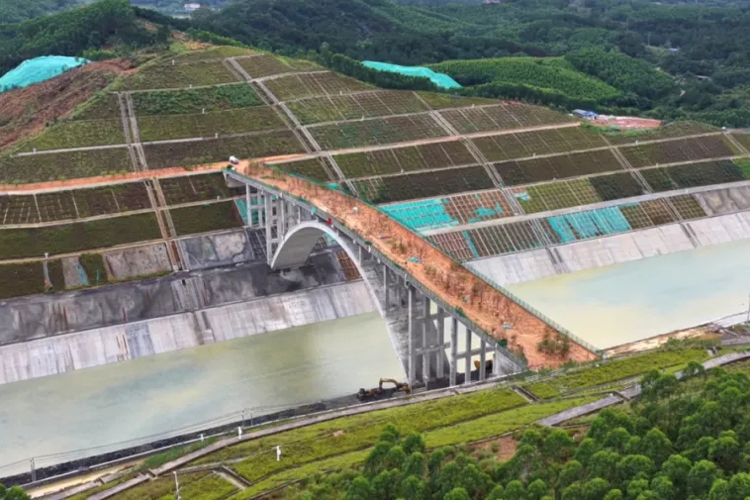
Photo shows an ecological corridor bridge above the Pinglu Canal.
Near the Qingnian hub, a dual-channel fish passage stretching about 480 meters has been built, featuring 120 pools and four resting ponds for migrating fish. Species whose migration routes had been blocked for more than 60 years have regained access, with more than 50,000 fish recorded using the passage in just over six months.
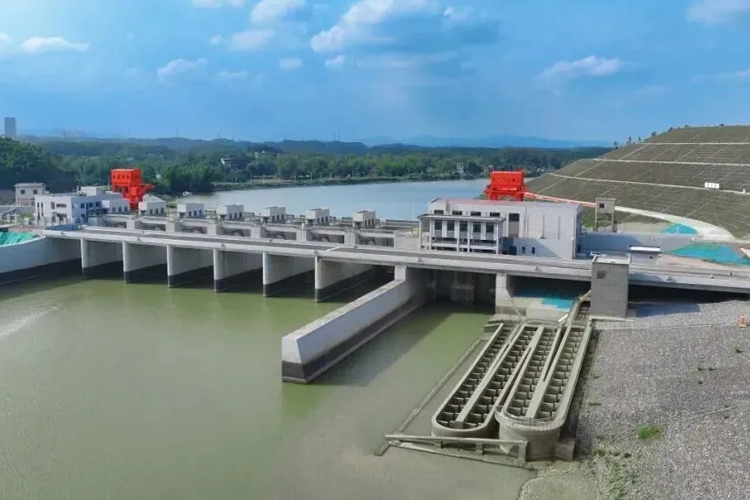
Photo shows a fish passage at the Qingnian hub of the Pinglu Canal.
To protect the 3,649 hectares of mangroves at the canal's estuary, builders adopted a combination of in-situ conservation and selective transplantation. In total, 9,572 mature mangrove trees were successfully relocated, while 275,000 saplings were replanted elsewhere, achieving a survival rate of over 90 percent.

Photo shows a panoramic view of mangroves at the estuary of the Pinglu Canal.
Construction of the canal involved excavating more than 315 million cubic meters of earth and rock. CCCC and Guangxi University jointly developed methods to classify and reuse the material for land reclamation, industrial park backfilling, and green building materials, achieving a utilization rate of over 98 percent.
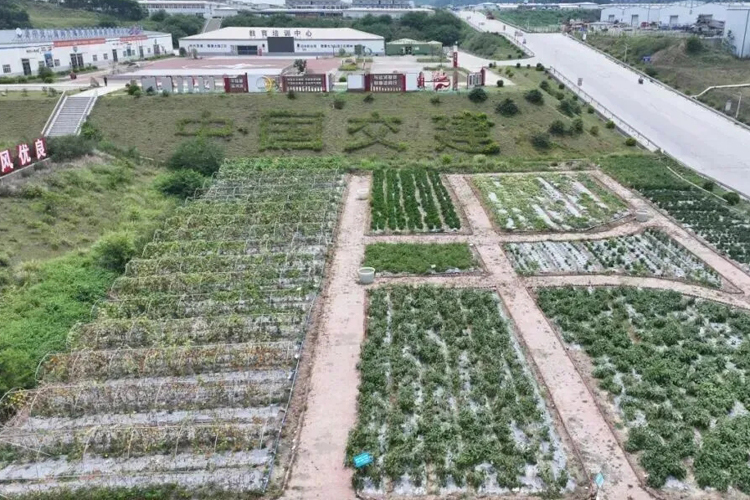
An experimental vegetable farm has been established at the industrial park of the Madao hub of the Pinglu Canal.
Editor: Second Harbor Engineering