
Zhijiang Yangtze River Bridge to end isolated town's reliance on ferries
Source:CCCCTime:2026-05-27
Recently, the Zhijiang Yangtze River Bridge in Yichang, central China's Hubei Province, built with the participation of CCCC, was successfully joined together, drawing widespread praise. The bridge will link the isolated Bailizhou town with downtown Zhijiang, ending the long history of more than 40,000 residents relying on ferries to cross the river.
Recently, the Zhijiang Yangtze River Bridge in Yichang, central China's Hubei Province, built with the participation of CCCC, was successfully joined together, drawing widespread praise. The bridge will link the isolated Bailizhou town with downtown Zhijiang, ending the long history of more than 40,000 residents relying on ferries to cross the river.
Once completed, it will cut travel time between the two sides from a two-hour detour to just five minutes.
The bridge is 1,549 meters long, with a main span of 890 meters and towers standing 257.5 meters high, making it currently the world's longest-span cable-stayed bridge with steel-UHPC composite girders.
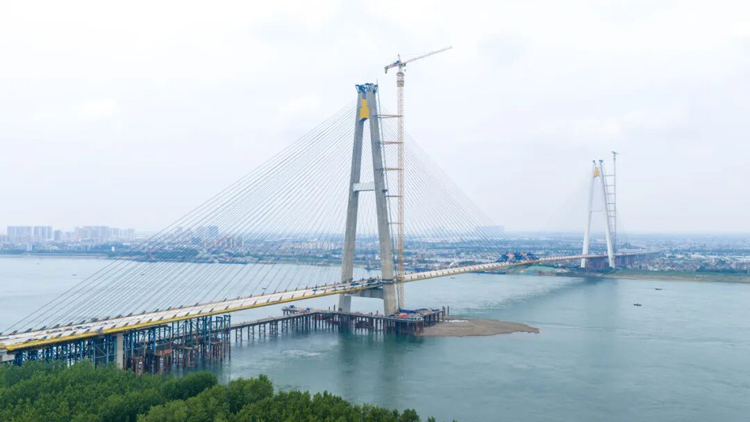
UHPC has compressive and flexural strength five to 10 times greater than ordinary concrete, while its fracture resistance is up to 250 times higher. With hardness approaching that of steel, it is highly resistant to cracking even under external impact, giving the bridge exceptional structural stability.
The bridge is located in an ecologically sensitive area along the Yangtze River. The project team adhered to green development principles throughout construction. Measures such as minimizing temporary land use, adopting slurry recycling systems, and using intelligent dust-suppression technology helped reduce the project's impact on the water and air environment to the greatest extent possible.
One netizen who once lived on Bailizhou left a heartfelt comment expressing local residents' long-held hopes for the bridge: "Now that the bridge has been connected, the road home will soon be smooth and unobstructed. I'm really looking forward to the next Spring Festival!"
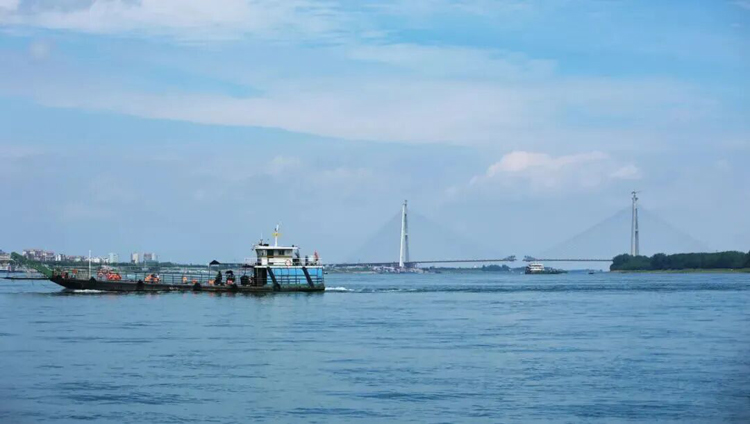
The bridge is expected to open to traffic by the end of 2026. Once operational, it will improve transportation for local specialty products such as Asian pears and cotton, reducing logistics costs and accelerating market entry, while boosting industries including fruit-picking tourism, island leisure activities, and riverside vacations.
Editor: Second Highway Engineering,People Daily