
Shuangliu Yangtze River Bridge opens to traffic in Wuhan
Source:CCCCTime:2026-03-31
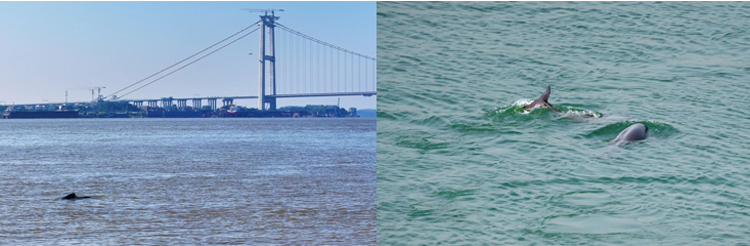
Today, the bridge and the porpoises together form a new and distinctive landscape along the Yangtze River.
The Shuangliu Yangtze River Bridge on the Xingang Expressway in Wuhan has officially opened to traffic, becoming the city's 12th bridge across the Yangtze River.
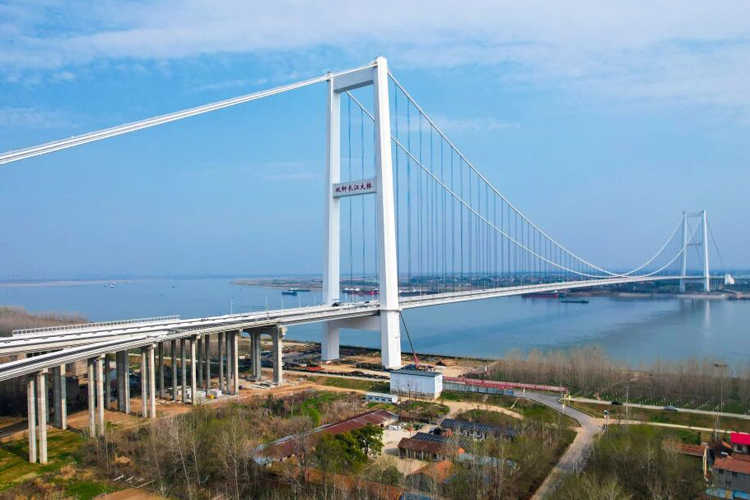
The new crossing significantly improves connectivity in eastern Wuhan. Travel time between the Wuhan National Aerospace Industry Base and the Wuhan Donghu New Technology Development Zone—two key innovation hubs—has been reduced from around one hour to just 30 minutes, substantially enhancing the flow of people and goods.
The bridge features a 1,430-meter single-span design crossing the river, with eight lanes in both directions and a deck width of 50.5 meters, making it the widest steel box girder suspension bridge on the Yangtze River. It has a design speed of 120 km/h.
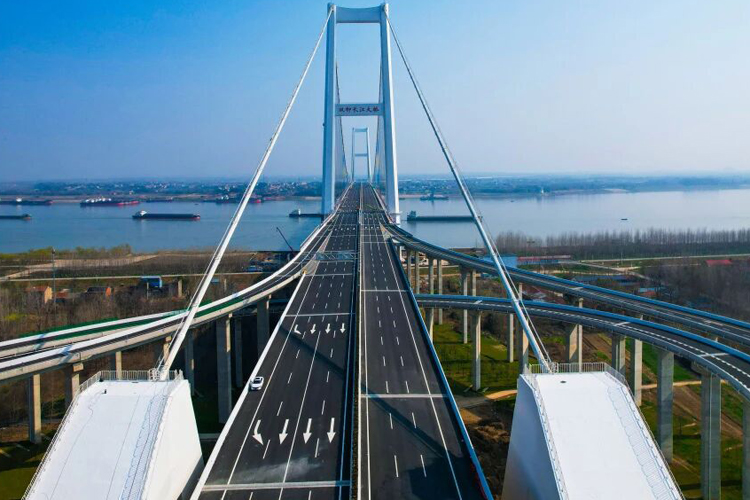
Advanced construction technologies were deployed throughout the project, including a "smart main cable" system independently developed by CCCC, a new-generation integrated intelligent tower-building machine, a flexible rebar mesh production line, and a digital twin-based virtual bridge platform—enabling fully digitalized construction processes.
Beyond engineering, the project places strong emphasis on environmental protection. During the planning stage, the alignment was optimized to avoid wetland areas by approximately 1 km. The bridge was designed without piers in the river, ensuring uninterrupted navigation along the Yangtze's major shipping channel while protecting aquatic habitats. Construction schedules were adjusted to avoid peak activity periods for aquatic species, alongside measures such as noise reduction, staggered operations, and zero wastewater discharge. Prefabrication and modular construction methods reduced on-site workload by 80%, minimizing environmental impact at the source.
Monitoring data shows that the number of Yangtze finless porpoise in the construction area increased from 5–6 at the start of the project to more than 20, while the number of recorded wetland bird species has exceeded 200. The project stands as a notable example of balancing infrastructure development with ecological conservation. Today, the bridge and the porpoises together form a new and distinctive landscape along the Yangtze River.
Editor: Second Harbor Engineering