
The Maya Train: Connecting history with the future, heritage with development
Source:CCCCTime:2025-12-04
According to the Mexican government's plan, by 2030, the Maya Train will operate 42 passenger trains, transporting at least 4 million passengers annually.
The Maya Train is transforming local travel and making it easier for tourists to visit ancient Maya ruins. It bridges history and the future, linking cultural heritage with modern development.
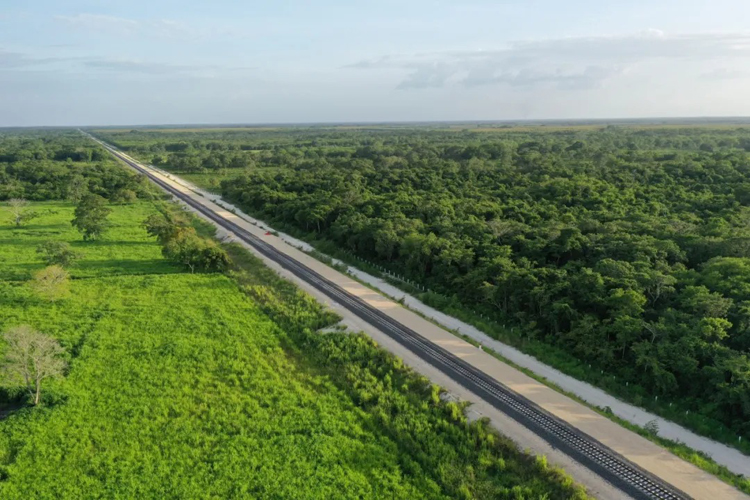
Stretching 1,554 kilometers, the railway is named after the Yucatán Peninsula, located in the heart of the Maya civilization. It connects Mexico's southern historical and cultural sites with its modern cities and is one of Mexico's largest infrastructure projects in recent years. In December 2023, the railway was officially inaugurated, with 34 stations in operation across the southeastern states of Chiapas, Tabasco, Campeche, Yucatán, and Quintana Roo.
CCCC undertook the Palenque to Escárcega section, covering 226 kilometers. During construction, the team overcame challenges such as the tropical climate and complex geology, creating a safe and modern railway for the region.
The railway has significantly improved transportation and infrastructure in southern Mexico, boosting tourism, trade, and economic development. By July 2025, the railway had completed 7,290 trips, transporting over 1.35 million passengers.
Sara, a 21-year-old college student, said, it is so convenient to take the Maya Train home now. Compared to long-distance buses, it saves time, is more comfortable, and has spacious seats with room for luggage.
"A lot of places I want to visit are now connected by the railway," said a British tourist.
"Now with the train, our whole family can easily travel together to see the Maya culture we've read about in books and experience the wonders left by our ancestors," said Maria from Hidalgo State, Mexico, as she prepared for her trip.
According to the Mexican government's plan, by 2030, the Maya Train will operate 42 passenger trains, transporting at least 4 million passengers annually. By then, it will not only be a key transportation method for local residents but will also connect with other railways, airports, and urban transport networks through an integrated transportation system, contributing to the region's sustainable development.
Editor: Xinhua