Phase 1 of Malaysia's ECRL completed and handed over
Source:CCCCTime:2026-11-17
The environmentally friendly East Coast Rail Link in Malaysia is expected to strengthen regional connectivity, boost investment, and promote inclusive and sustainable development between the country's east and west coasts.
The Phase 1 (Kota Bharu-Gombak section) of the East Coast Rail Link (ECRL) in Malaysia, built by CCCC, was recently completed and handed over 50 days ahead of schedule. This milestone means the section is fully ready for trial operations. It is slated to enter service in mid-December.
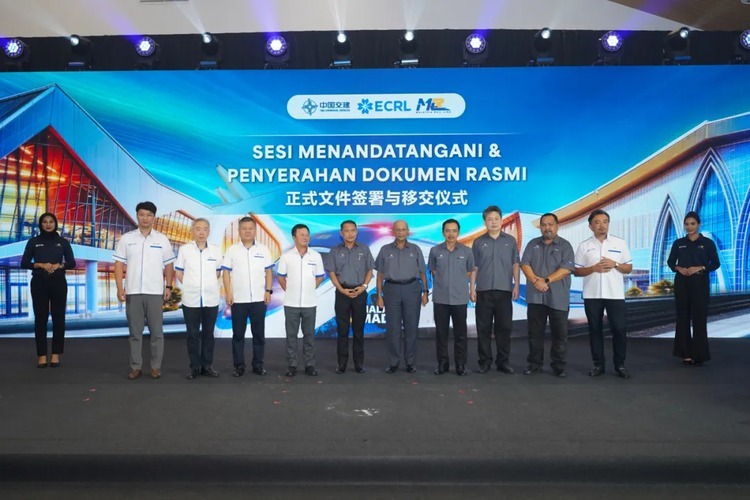
Datuk Seri Darwis Abdul Razak, CEO of Malaysia Rail Link (MRL), attended the handover ceremony. He expressed that once commercial operations begin, the ECRL will serve as a catalyst for economic growth and sustainable development, strengthen connectivity along the route, and bring greater investment opportunities to the East Coast states.
Spanning 665 kilometers in total, the ECRL is Malaysia's first modern electrified railway built using Chinese technical standards. The Kota Bharu-Gombak section stretches 519.3 kilometers and has 16 stations along the route. Once operational, travel time from Kuala Lumpur to Terengganu, one of the most popular tourist destinations in the East Coast, will take just over two hours, while the journey to Kota Bharu will take just four hours.

Photo shows dynamic train testing along the Kota Bharu-Gombak section of Malaysia's East Coast Rail Link.
A green path to prosperity
The Genting Tunnel, one of the project's key control works, stretches 16.39 kilometers and connects Gombak Station and Bentong Station. Varying surrounding rock conditions made construction challenging. To address this, the project team deployed two China-developed open-type hard rock tunnel boring machines (TBMs), enabling safe, fast, and smart tunneling in complex geological conditions while minimizing environmental impact on the mountain range.
Through design adjustments, the number of forest reserves crossed by the route was reduced from 35 in earlier plans to 13, cutting the affected area by nearly 90 percent. To protect wildlife migration, more than 20 crossings, bridges, and culverts have been built along the line so animals such as Malayan tapirs and elephants can pass safely.

In recognition of the ecological and scientific value of the Klang Gates Quartz Ridge in Gombak, Selangor, Bridge 30—measuring roughly 2.3 kilometers long—curves in a U-shape to bypass the formation.
Through the PLKI-ECRL program linked to the project, plans are underway to train 5,000 local rail professionals, with nearly 3,000 trained to date. The project has also generated more than 23,000 jobs across Malaysia and neighboring countries.
Once open, the ECRL will provide faster, more cost-effective logistics solutions, significantly boosting the competitiveness and investment appeal of the East Coast and supporting more balanced, inclusive, and sustainable growth. Alongside the rail line, several economic and industrial parks, logistics hubs, and commercial development projects are already moving forward, including the Tok Bali Integrated Fisheries Park, the Pasir Mas Halal Park, and the Malaysia-China Kuantan International Logistics Park.
Editor: CHEC