
CCCC-built robots shine at 2026 World Robot Conference
Source:CCCCTime:2026-08-26
The 2026 World Robot Conference recently opened in Beijing. CCCC displayed seven types (sets) of robotic equipment, showcasing the achievements of the transformation and upgrading of engineering construction driven by robotics.
The 2026 World Robot Conference recently opened in Beijing. CCCC displayed seven types (sets) of robotic equipment, showcasing the achievements of the transformation and upgrading of engineering construction driven by robotics.
Let's take a look!
Robots that work in tunnels
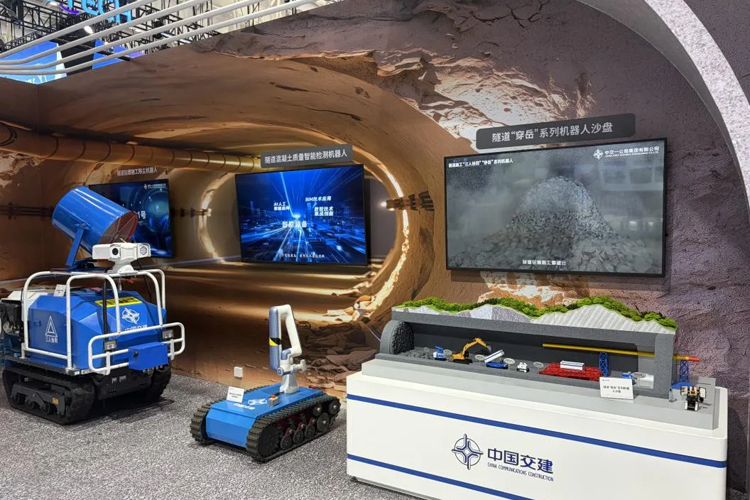
The series represents CCCC's years of exploration in intelligent construction of tunnels through mountains, vividly demonstrating a new operating model in which humans direct, digital humans dispatch, and robots execute.
Among them, the tunnel drilling and blasting dust removal robot features a water-mist-based dust suppression system developed as a domestic first. Within 10 minutes after blasting, it can reduce dust concentrations from 800 milligrams per cubic meter to below 10 milligrams, saving more than 30 minutes compared with conventional methods and cutting overall operating costs by more than 75 percent.
The intelligent tunnel concrete quality inspection robot can perform multiple tests with a single machine, automatically completing multidimensional concrete quality inspections in just 15 minutes with an accuracy rate of up to 95 percent. Its operating efficiency is 85 percent higher than manual inspection.
A tunnel robot sand table demonstrates the coordinated operation of a series of robots following tunnel drilling and blasting, enabling integrated intelligent control of dust removal, debris clearance, precision surveying and safety inspection.
Magnetic wall-climbing steel formwork grinding and cleaning robot
The robot moves nimbly across metal surfaces. Using permanent-magnet adsorption and AI-powered recognition, it autonomously plans its route to clean large areas of steel formwork. Its operating efficiency is about three times that of conventional manual work, reducing labor input by more than 80 percent.
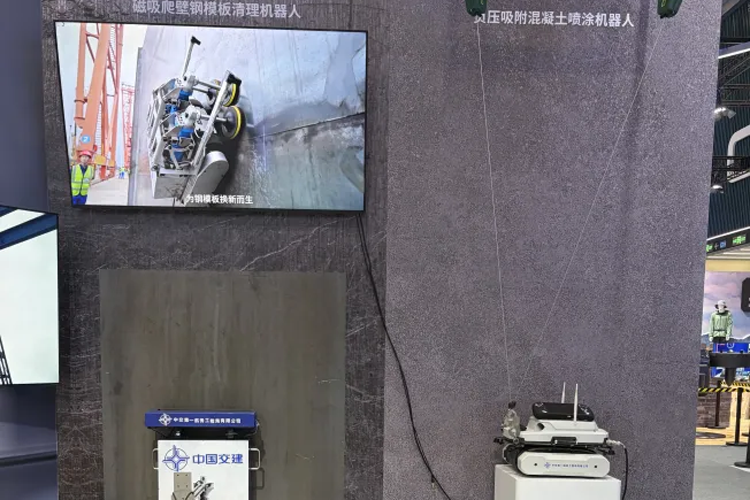
Magnetic wall-climbing steel formwork grinding and cleaning robot (left)
Negative-pressure adhesion concrete surface spraying robot
The robot clings securely to concrete walls, applying anti-corrosion coatings evenly. It not only frees workers from working-at-height risks but also shifts quality control from relying on experience to being perceivable, plannable and verifiable.
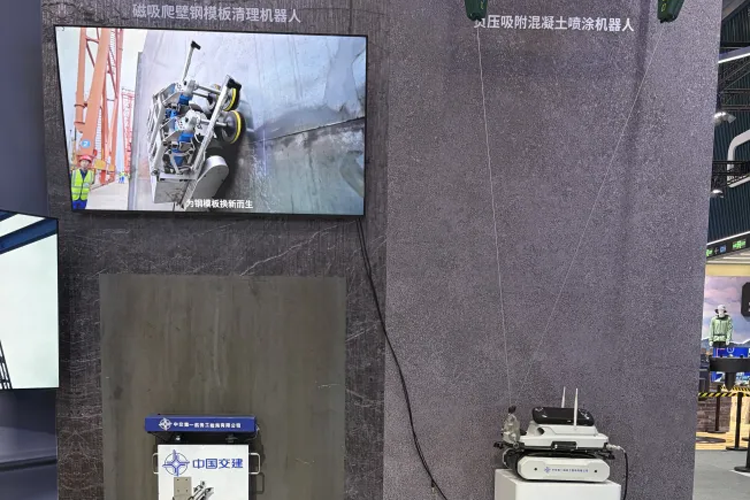
Negative-pressure adhesion concrete surface spraying robot (right)
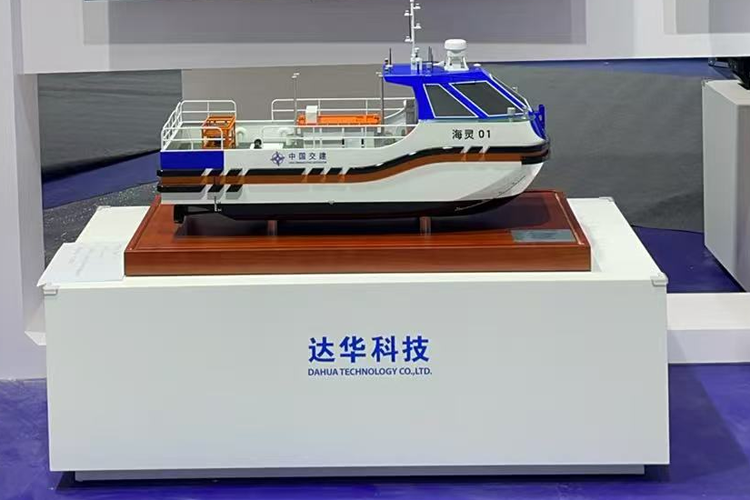
"Hailing 01" dredging mother ship companion survey robot
The robot travels alongside a dredging mother ship and automatically collects bathymetric data, providing dredging operations with a "smart eye" for real-time monitoring.
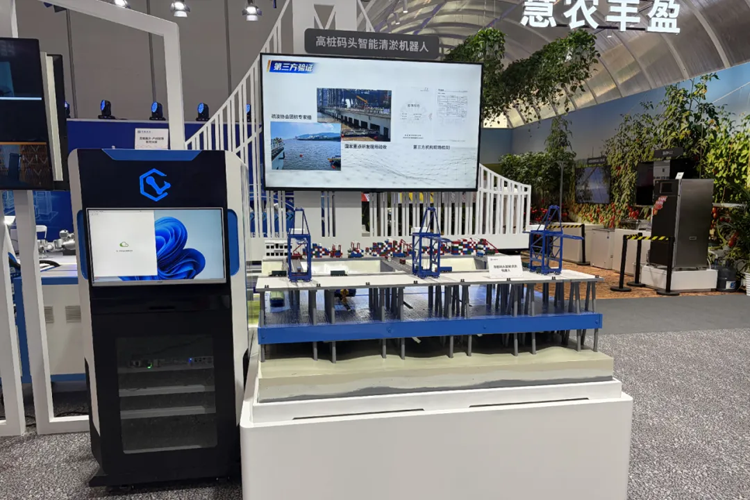
Intelligent high-pile wharf silt clearing robot
This robot can reach confined spaces beneath and behind piles that are difficult for conventional equipment to access. It is fully electric, producing zero emissions and low noise, with a silt-clearing capacity of up to 200 cubic meters per hour.
The robotic equipment may vary in form, but they all address the same question: How can engineering construction become safer, more efficient, greener and more precise? Robots are transforming not only construction methods, but also demonstrating the intelligent core of Chinese construction.
Looking ahead, CCCC will continue to deepen the integration of AI, robotics and engineering construction, bringing more equipment to major projects to safeguard workers, enhance construction quality and drive the industry forward.
Editor: CCCC