
World's first ±500 kV flexible DC submarine cable completed
Source:CCCCTime:2026-07-30
The deep sea is the next frontier for offshore wind power. But unlike nearshore projects, developing wind farms farther offshore faces a major challenge: how to reliably transmit vast amounts of clean electricity generated far out at sea back to shore. The internationally recognized solution is flexible DC submarine cable technology, a field that has become a key battleground for the world's leading offshore engineering companies.
The deep sea is the next frontier for offshore wind power. But unlike nearshore projects, developing wind farms farther offshore faces a major challenge: how to reliably transmit vast amounts of clean electricity generated far out at sea back to shore. The internationally recognized solution is flexible DC submarine cable technology, a field that has become a key battleground for the world's leading offshore engineering companies.
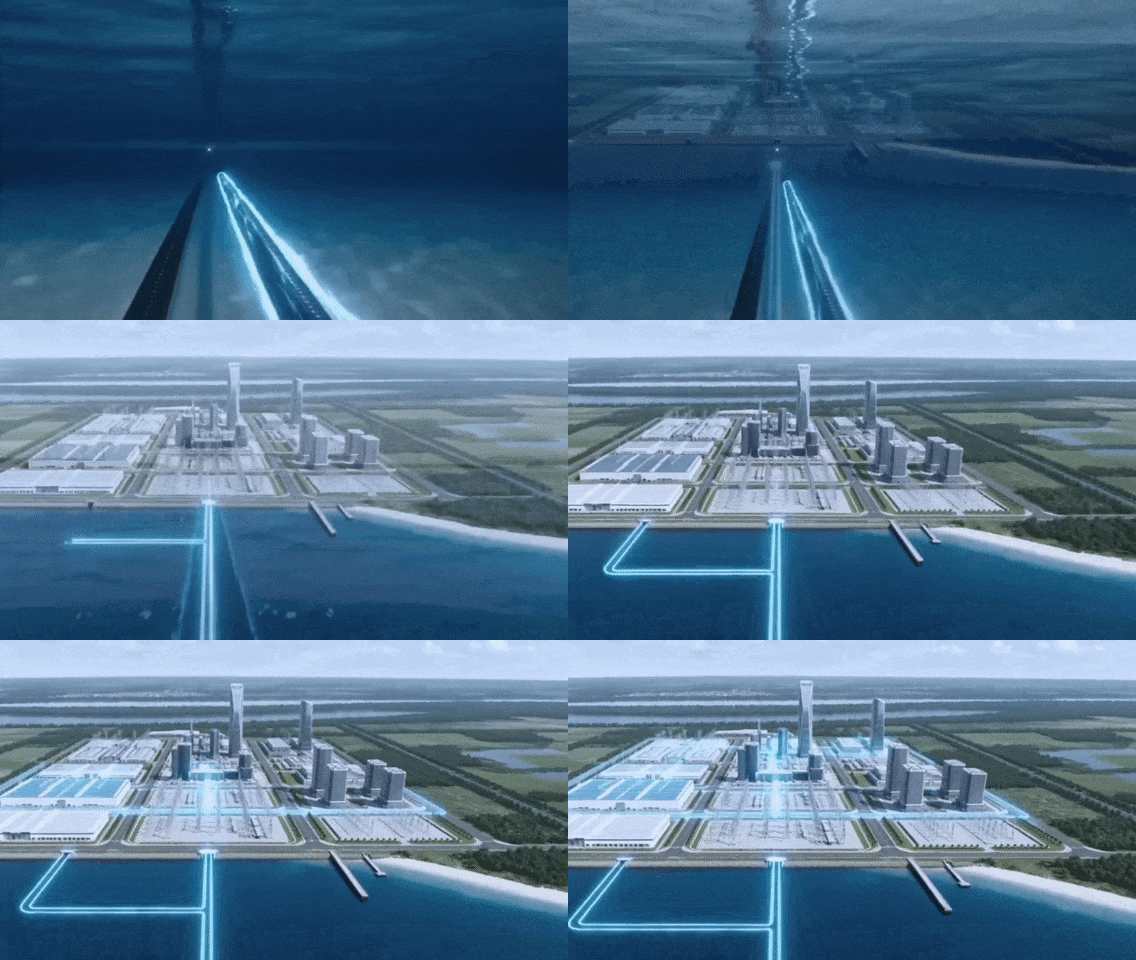
Recently, the Qingzhou Phase V and Phase VII offshore wind farms in Yangjiang, Guangdong Province, completed the installation of an 88.8-kilometer submarine cable, marking the completion of the world's first ±500 kV flexible DC submarine cable. The cable has been successfully connected to the world's largest offshore converter station, "Hai Feng Zhi Xin," or "Heart of the Sea Wind," offering a Chinese solution for transmitting electricity from deep-sea wind farms.

What makes this ±500 kV flexible DC submarine cable stand out? Unlike the AC submarine cables widely used in conventional offshore wind projects, which suffer from relatively high transmission losses, the new system converts the electricity generated by wind turbines from AC to DC at an offshore converter station, transmits it through an DC submarine cable, and converts it back to AC onshore. This reduces transmission losses by about 60 percent compared with conventional AC cable systems.

Once operational, the 163 wind turbines at the two wind farms will supply about 6 billion kilowatt-hours of green electricity annually to the Guangdong-Hong Kong-Macao Greater Bay Area, cutting carbon dioxide emissions by an estimated 5 million tonnes each year.
Editor: Third Harbor Engineering