
Xinjiang: Urumqi-Yuli Expressway opened to traffic, crossing the Tianshan Mountains now takes just 20 minutes
Source:CCCCTime:2025-12-31
The opening of the Urumqi-Yuli Expressway establishes a faster north–south corridor across Xinjiang, further boosting regional connectivity and socio-economic development.
After five years and eight months of construction, the Urumqi-Yuli Expressway has been officially opened to traffic. Its controlling project—the Tianshan Shengli Tunnel, the world's longest highway tunnel—has reduced the time required to cross the Tianshan Mountains from three hours to just 20 minutes. Travel time between Urumqi and Korla has been cut dramatically from around seven hours to approximately 3.5 hours.
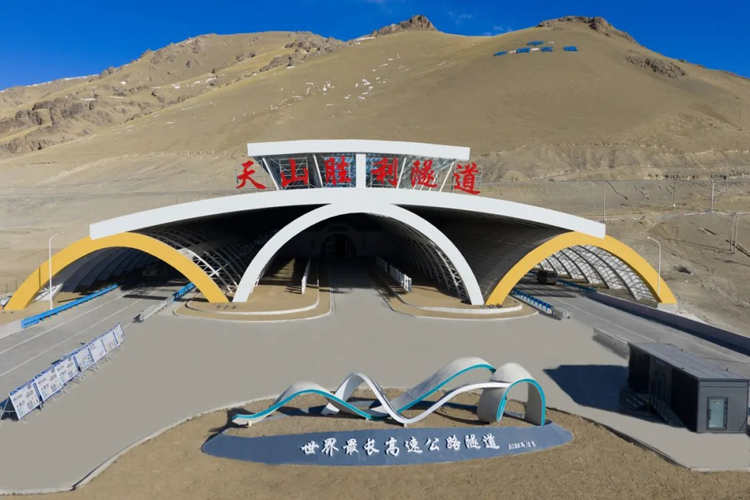
The construction conditions of the Tianshan Shengli Tunnel were extremely complex, presenting unprecedented technical challenges. CCCC introduced three major innovations—enhanced safety and risk mitigation, landscape-oriented design, and intelligent ventilation—to deliver a safe and comfortable driving experience along the 22.13-kilometer ultra-long tunnel.
Inside the tunnel, a light-and-shadow art corridor inspired by Tianshan scenery has been created, simulating a spacious, bright, and natural outside-the-tunnel driving environment. This immersive design helps alleviate driver fatigue during long journeys.

The project team pioneered a three tunnels plus four vertical shafts excavation scheme. In addition to the two main tunnels, a central tunnel was constructed, effectively dividing the main tunnels into more than 30 shorter sections of around 800 meters each. This approach significantly shortened the construction period. After opening, the central tunnel now serves as a dedicated emergency rescue corridor, enabling rapid access in the event of accidents or fires.


The tunnel, located in a high-altitude, cold region with lower oxygen levels than plains, required advanced ventilation. The team designed an intelligent system that divides it into five sections for longitudinal ventilation, ensuring safe operation.
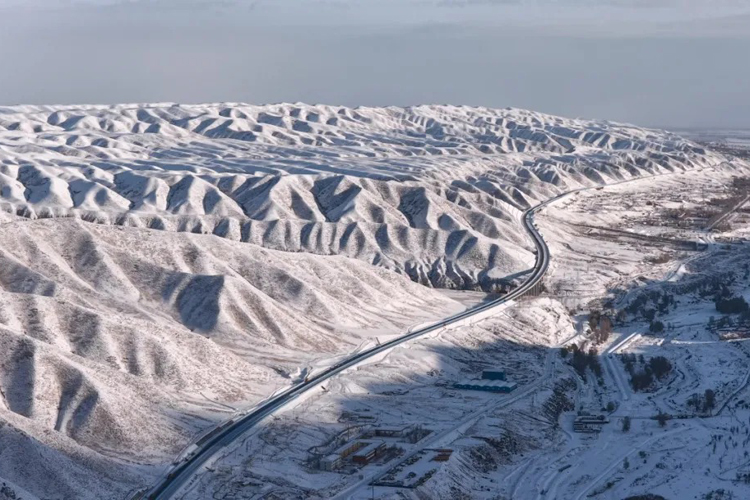
The Expressway is a core component of the Urumqi–Ruoqiang Expressway, with a total length of 324.7 kilometers. During construction, the project created 1,582 jobs, and once fully operational, it is expected to provide employment for another 1,210 people. The opening of the Urumqi-Yuli Expressway establishes a faster north–south corridor across Xinjiang, further boosting regional connectivity and socio-economic development.
Editor: Second Highway Engineering